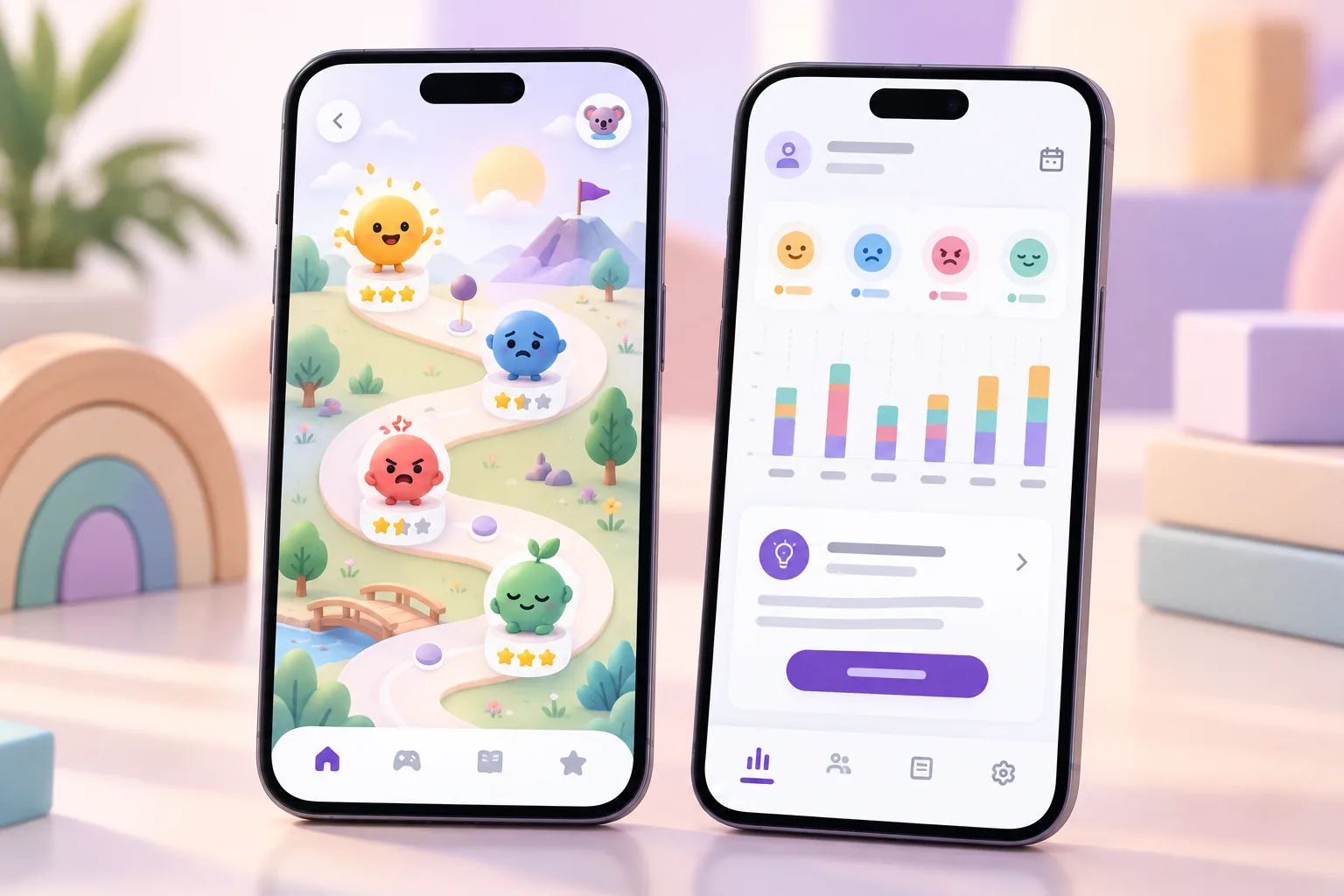
Helping kids understand their emotions, and parents understand their kids.
A child therapist came with a clear mission and no product yet: help kids and teens understand their emotions and how their brain works. Together we shaped it into a two-sided app: interactive games, journaling prompts and daily check-ins for kids, and an AI-powered version for parents with insight and concrete ways to connect.
Role
UX/UI Designer
Product
App for kids, teens & parents
Industry
Mental health · Education · AI
Status
In development · funding on the way
Concept visualization · real screens under NDA
Starting point
The client is a therapist who works with children. She brought deep expertise in the psychology of emotions, and didn’t know where to start with a digital product.
My job was to turn her knowledge into an experience kids would actually choose to come back to.
The challenge
Psychology is hard to explain to adults, let alone to a young child or a teenager. The app had to:
Make learning about emotions feel like play, not homework
Hold the attention of kids across very different ages
Explain what happens in your body when an emotion shows up, in a way kids can use in daily life
Turn kids’ activity into something meaningful for their parents
Key decisions
Learning lives inside the game
Interactive games are the core of the experience. At the end of each level or challenge, kids find short, easy-to-digest content, so they learn right after they’ve experienced something, and can carry it into their day.
Small daily habits
Journaling prompts and daily check-ins give kids a simple, repeatable way to notice and name what they feel.
One product, two experiences
Kids and parents need very different things. Parents get their own version of the app that turns journaling, check-ins and learning into insight about what their child is going through.
AI that points to action
An AI integration pairs those insights with specific recommendations, so parents don’t just see data: they get concrete ways to connect with their kids.
Her clinical knowledge defined what each experience needed to teach. UX defined how to make kids want to play it.
How we worked together
Outcome
In developmentThe app is being built now.
Funding on the wayThe project is moving forward with funding underway.
A two-sided productA kid experience and a parent experience designed as one system.
Product screens aren’t shown here to respect the client’s confidentiality. The cover is a concept visualization, and I’m happy to walk you through the real work on a call.