Minimum steps, maximum signal
Manual logging is designed around the least a driver or fleet manager needs to do, while still capturing what matters for predictions.
In development
A platform for managing trucking fleets with a clear view of each truck’s health. It combines manual maintenance and repair logs with data from connected tools, so AI can predict likely failures before they happen, and recommend specific actions to prevent them.
Predictions are only as good as the data behind them, and much of that data depends on people entering it by hand: every maintenance event, every repair.
Those people are busy. Drivers are on the road; managers are responsible for an entire fleet. Every extra step in logging a repair is a reason to skip it, and every skipped log makes the AI less useful.
Make manual input as light as possible for a busy user, with the fewest possible steps, without losing the data the product needs to make good predictions.
Manual logging is designed around the least a driver or fleet manager needs to do, while still capturing what matters for predictions.
Integrations send data directly into the app, so manual input fills the gaps instead of carrying the whole load.
Each truck’s condition is visible clearly, so managers know where to look first.
AI output is framed as specific recommendations to avoid failures, not just alerts, so the next step is always clear.
The best predictive model in the world can’t fix data nobody enters.
Why the input experience mattered most
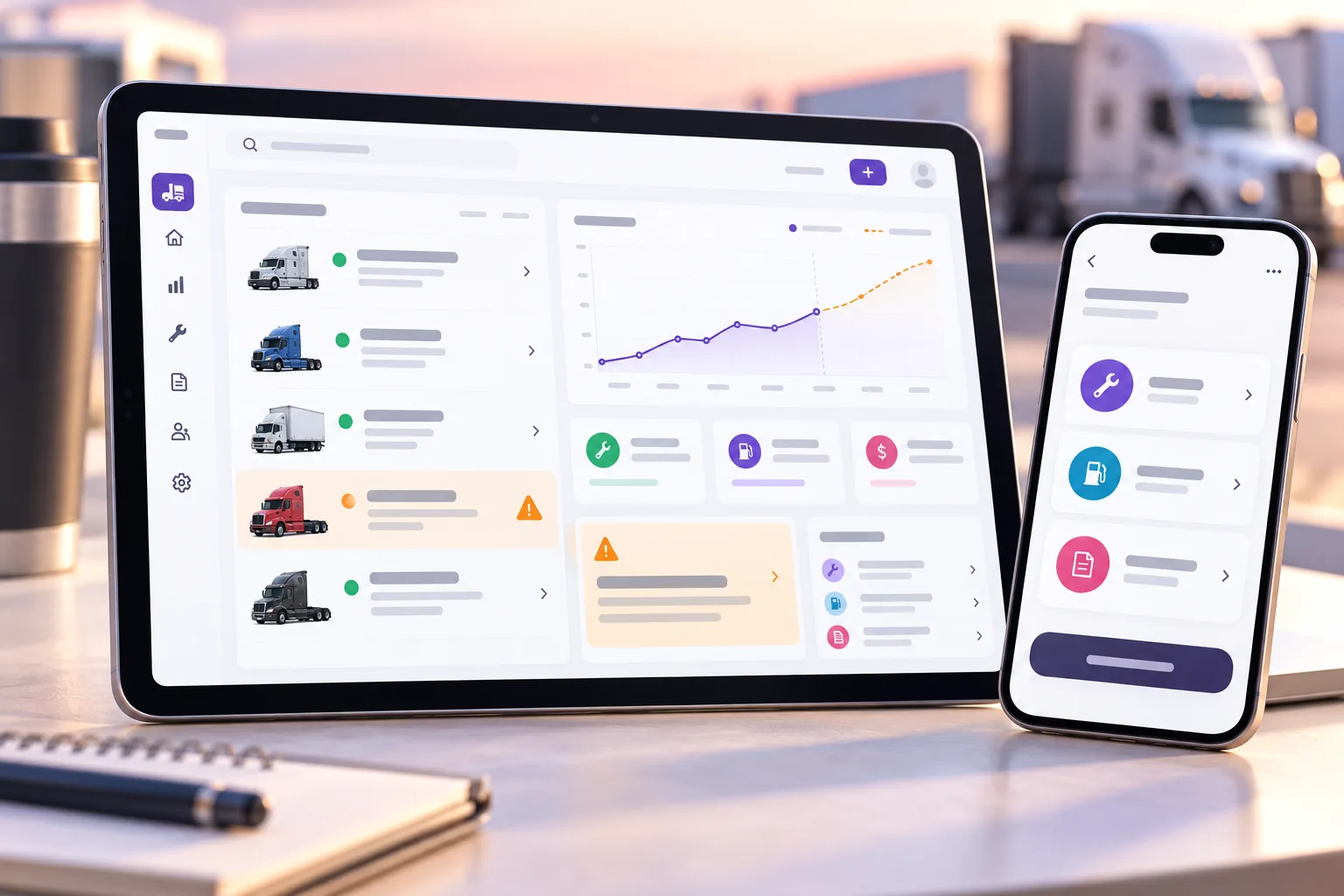
Product screens aren’t shown here to respect the client’s confidentiality. The cover is a concept visualization, and I’m happy to walk you through the real work on a call.